



How To Hire a Backcountry Ski Guide
Choosing a Backcountry Ski Guide, and What To Ask Before You Go
This winter has been rough for a lot of us—the lack of snow in Colorado and Utah, an avalanche tragedy in California, and sketchy conditions in the Rockies due to warm temps and (gasp) rain. But hey, skiing in any conditions is still way more fun than being in the office, and most of us can still find plenty of places to ski safely in the backcountry.
Of course, hiring a guide is one of the best ways to increase your safety factor, but obviously that’s never a safety guarantee. There are, however, ways to properly vet your guide so you can mitigate the risks and hire the right one for you. Here’s how to do it best.

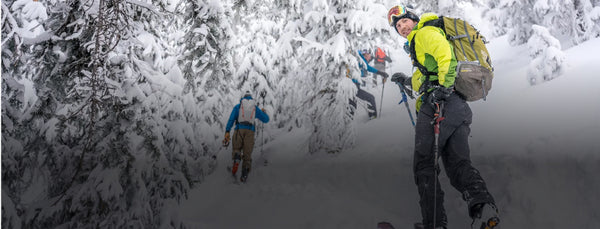
Photo by Will Berger
Start With Credentials—but Don't Stop There
The baseline for any guide you hire should be certification through the AMGA or an internationally recognized equivalent like the IFMGA (International Federation of Mountain Guides Associations). For avalanche-specific competency, look for instructors certified through the AIARE.
Keep in mind that some ops say they are an “AMGA Accredited Guide Service,” which does not necessarily mean your guide is certified. This is just saying the company has a stamp of the AMGA’s approval for its business practices, not that they use only certified guides.
These certifications represent hundreds of hours of training and field time. That said, credentials are just the basics, so after you’ve confirmed credentials, it’s time to dig deeper.

Photo by Will Berger
Vetting a Guide Service: Ask Questions That Matter
Before you book, have a tough conversation with the guide service (a good operation will welcome it). Here’s what to ask:
• What is your decision-making process in the field?
You want to hear the operation has a culture of conservative judgment: guides who are willing to turn around, change plans, and communicate openly with clients about conditions. If the answer sounds like a sales pitch, keep looking.
• How do you handle itinerary changes due to weather or snowpack?
Look for flexibility built into their trips. Ask specifically what they would do in your planned area under the worst conditions.

• What is your guide-to-client ratio?
The industry’s best practices generally recommend smaller ratios, like three to one, for complicated terrain.
• Do you carry out pre-trip avalanche assessments, and can I see a sample?
Reputable services document their daily hazard evaluations. If they can’t or won’t share that process, that tells you a lot.
• What safety gear is provided and/or required?
At the bare minimum, you should be carrying an avalanche beacon, shovel, and probe, and have the basic knowledge of how to use them. If a service doesn’t mandate this, they’re not operating safely. We would also recommend adding walkie talkies and satellite phones to the list, as communication is key to safety. (Lots of guide ops offer these for day-rentals.)
• Can you provide references from past clients?
The guiding community is small, and references can tell you a lot. Reach out and ask whether they ever felt pressured to continue when conditions seemed sketchy.

Photo by Will Berger
Trust Your Gut and Use Your Voice
The mountains don’t care how many certifications anyone holds. You still have a job to do out there, which is why we recommend completing your own avalanche safety course so you’re better informed. And if you don’t speak up when you don’t feel safe, you’re contributing to a group dynamic that can get people killed.
Before you leave the trailhead on any guided trip, make it clear both to yourself and to your guide that you reserve the right to voice concerns at any point, and that you expect your concerns to be taken seriously. Any guide worth hiring will tell you the same thing, and the group’s plan should be tailored to whomever has the lowest tolerance for risk.
If you’re moving through terrain and something doesn’t feel right—the snow sounds hollow, the slope is steeper than you expected, the weather is changing faster than the forecast said—say something. Say it out loud, clearly, to your guide.
The mountains aren’t a place where any one person, regardless of how experienced, should make decisions alone. You’re part of the team.
Finding Qualified Guide Services
A few resources for finding certified, vetted guide services in the U.S.:
• AMGA Guide Finder:
The American Mountain Guides Association offers a searchable database of certified ski guides (whose designation also means they’re avalanche-safety certified) on their website.
• Local avalanche centers:
Regional avalanche centers often maintain relationships with trusted local guide services and can offer informal recommendations.
This season has been difficult for a lot of reasons—the drought, the losses, the uncertainty. But the backcountry is still out there, and guided travel done right is among the safest ways to access it. Hire well, ask hard questions, and speak up.

--
Article by Kimberly Beekman
Kimberly Beekman is the former editor-in-chief of the late, great Skiing Magazine (RIP), and a longtime editor of SKI Magazine before that. She currently uses the title of “freelancer” as a beard to ski powder all over the world. She lives in Steamboat, Colorado, with her wonderful daughter and terrible cat.