


Pete McBride: Giving the Colorado River a Voice, One Ski at a Time
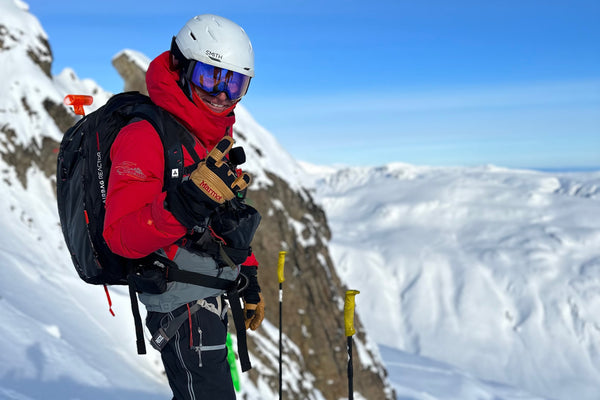
When photographer, filmmaker, writer, and public speaker Pete McBride grew up skiing in Colorado’s Roaring Fork Valley, snow from the top of Aspen Mountain would eventually reach the ocean. Now, it no longer does.
The course of the Colorado River has been altered drastically in McBride’s lifetime. Heavy diversion for agriculture, paired with dams, drought, and climate change, have truncated the river significantly and dried up tributaries. After 25 years of drought and higher than normal temperatures, the nation’s two largest reservoirs on the lower Colorado—Lake Powell and Lake Mead—are now roughly 25% full. The Colorado River is in crisis, which threatens every aspect of life in the U.S.: our wildlife, ecosystems, crops, drinking water, recreation, culture, economy, and, ultimately, our own survival.
“It’s all interconnected,” McBride said.
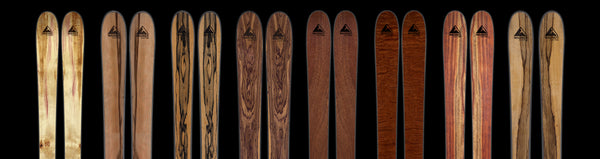
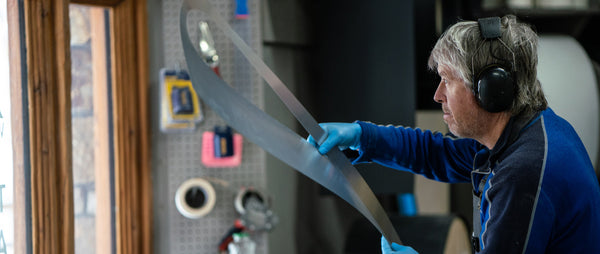
McBride has spent the last 30 years telling river conservation stories through his adventure writing, photography, and filmmaking. Now, he’s found a new medium: Wagner topsheets. His new Watershed Artist Series—a collaboration with American Rivers and The Nature Conservancy—feature photographs from his archives of the Colorado River Basin to raise awareness about the Colorado River crisis. Wagner Custom will donate a portion of all proceeds to rivers conservation.

"Alpenglow" by Pete McBride
The tips of the skis feature McBride’s photos of the top of the watershed and the tails the parched land at the end, where the river no longer flows. “If you buy a pair of skis, you’re doing a source-to-end journey, from tip to tail,” McBride said. “We’re trying to give the river a voice.”
Skis are an especially apt canvas for McBride for two reasons. First, he comes from a ski family, but not just any ski family. McBride raced at Dartmouth College and coached the alpine race team at the University of Colorado. His brother, Johno, was an Olympic coach to Bode Miller and Daron Rahlves and is in the Colorado Snowsports Hall of Fame.
Second, ski resorts in Colorado sit at the top of the watershed for the Colorado River. “The place where we may want to turn and escape the world for a cold second is the water source for the lifelines that sustain us,” McBride said. “If you’re coming from L.A. or San Diego or Denver to go skiing, that snow is eventually coming out of your tap. Your favorite double-black is also your cold glass of water from the kitchen sink.”

"Flow" by Pete McBride
While this series is focused on the Colorado River specifically, the awareness it raises is applicable to the rivers, lakes, and reservoirs across the nation and all over the world. According to Page Buono, director of Southwest communications for American Rivers, a national nonprofit dedicated to protecting rivers, nearly 70% of the water we use in the U.S. comes from surface water, rivers streams, and lakes. “We cannot survive without rivers,” she said. “And most people don’t know where their water comes from.”
“The Colorado River is one of the hardest working rivers,” says Celene Hawkins, The Nature Conservancy’s Colorado River Program Director. “It supports 40 million people, 30 Tribal nations as well as agriculture, hydropower, and a robust recreation economy. The river is also a critical lifeline for wildlife providing water and habitat for threatened and endangered fish, an abundance of migratory and resident birds, and iconic mammals such as bears, otters, elk and moose.”
McBride’s four designs—Flow, Rapid, Alpenglow, and Wild—are intended to be a visual reminder that our winter snow is part of the entire river picture, which in turn is part of the entire human picture.
The awe-inspiring photographs on Alpenglow and Rapid are aerial images of the Canyonlands, which are rare because national parks forbid drone photography. To capture them, McBride shot them from a single-engine plane flown by McBride’s father. “It’s a family affair,” McBride said.

"Rapid" by Pete McBride
The Rapid graphic also features the estuaries that house the last bird sanctuary on the Colorado River Delta, which is symbolic of the river’s resiliency—if we give it a chance. “Birds help keep natural systems in check, which ultimately supports agriculture too,” McBride said, “If you like spinach in January, then you like estuaries.”
That resiliency is something McBride has seen first-hand—and proves the efforts of organizations like American Rivers makes a difference. When he first attempted to paddle the Colorado to the sea in 2008, he ended up hiking the last 90 miles through the desert salt pan because the river ran dry. After that journey, he felt hopeless about the environmental tragedy he witnessed.
But when he returned recently to document years of collective conservation efforts on a single estuary, he witnessed remarkable recovery—though only in small pockets. It was proof that restoration is possible and a call to action for more awareness and activism.

"Wild" by Pete McBride
“I’ve seen it go from cracked earth wasteland back to an actual cottonwood, salt cedar, and mesquite forest full of birds and teeming with a whole different ecology,” he said. “The more we can engage our voice, even if you get signatures on a petition, it starts to help. I’ve seen it stop projects in their tracks. I’ve seen success stories from people supporting small environmental movements that are not at odds with the economy.”
A portion of the proceeds from McBride’s skis will go toward protecting the rivers that sustain us. You can also sign American Rivers’ petition to encourage those who manage the Colorado River to help protect it. To read more about McBride and his work, check out his website or follow him on Instagram.
--
Article by Kimberly Beekman
Kimberly Beekman is the former editor-in-chief of the late, great Skiing Magazine (RIP), and a longtime editor of SKI Magazine before that. She currently uses the title of “freelancer” as a beard to ski powder all over the world. She lives in Steamboat, Colorado, with her wonderful daughter and terrible cat.
